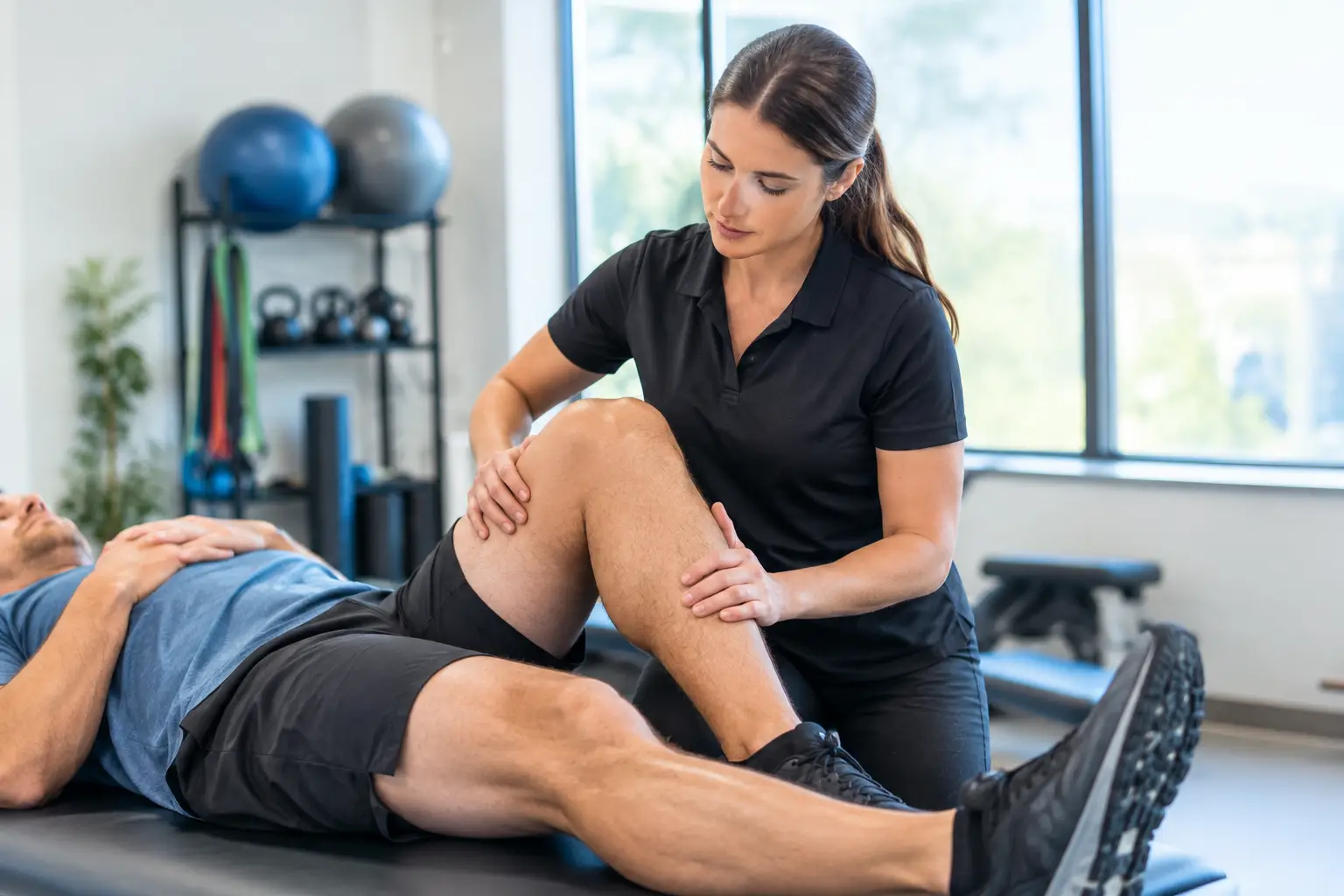
A low back that tightens up after a normal gym session. Achilles pain that returns halfway through a run. A shoulder that settles for weeks, then suddenly hurts reaching overhead. Why pain flares is one of the most frustrating questions in musculoskeletal rehab, especially when you felt like the problem was behind you.
A flare-up does not automatically mean you have caused new damage or erased all previous progress. More often, it means the irritated area and the rest of your system were not yet prepared for the total load placed on them. The right response is not always complete rest, more stretching, or trying to push through. It starts with understanding what changed.
What Is a Musculoskeletal Pain Flare-Up?
A pain flare-up is a noticeable increase in symptoms from an existing or recurring musculoskeletal problem. It may involve more pain, stiffness, sensitivity, weakness, reduced range of motion, or a lower tolerance for work, training, walking, sitting, or sleep.
Flare-ups are common with conditions such as recurrent low back pain, neck pain, rotator cuff-related shoulder pain, knee osteoarthritis, patellofemoral pain, tennis elbow, Achilles tendinopathy, and plantar fasciitis. Symptoms can vary significantly from one person to another, so the same pattern does not always point to the same diagnosis.
The key distinction is this: pain intensity and tissue damage are not always equal. A sharp increase in pain deserves attention, particularly after a meaningful injury, but it does not automatically mean something has torn, slipped out, or permanently worsened. Musculoskeletal tissues and the nervous system can become more sensitive when their current capacity is exceeded.
Why Pain Flares When You Felt Fine Yesterday
Pain often has a delayed relationship with activity. You may tolerate a long day on your feet, a new lifting session, a weekend of yard work, or several hours at a desk, then feel the consequences later that evening or the next morning.
Load Increased Faster Than Capacity
The most common driver is a mismatch between load and capacity. Load includes more than exercise. It is the total demand placed on your body through training, work, commuting, lifting kids, house projects, sport, and daily movement.
Capacity is what your body can currently tolerate and recover from. If you have been rebuilding after back pain but suddenly add heavy deadlifts, extra shifts at work, poor sleep, and a hockey game in the same week, the total demand may exceed your current capacity. That does not mean deadlifts, work, or hockey are inherently harmful. It means the progression may have outpaced what your body was ready to handle.
This is why pain can flare after activities that used to feel easy. Capacity is not fixed. It can improve with progressive loading and consistent rehabilitation, but it can also temporarily drop after illness, time away from activity, a stressful period, or a significant change in routine.
You Returned to One Activity but Not Full Function
Symptoms can settle before strength, endurance, coordination, and confidence have caught up. Someone with Achilles pain may be able to walk comfortably but still lack the calf capacity for hills, speed work, or repeated jumping. A person with shoulder pain may feel fine during light pressing but flare after a high-volume upper-body workout.
This is a common gap in recovery. Passive treatment or rest may reduce irritation in the short term, but pain often returns when the person resumes the exact demands that exposed the weakness in the first place. Rehab needs to prepare you for your real life, not just get you through a quiet day.
The Area Became More Sensitive
After repeated episodes, the body can become more protective around a painful region. Muscles may tense sooner, movements can feel threatening, and a previously manageable activity can provoke symptoms more quickly. This does not mean the pain is imagined. It means the experience of pain is influenced by both local tissue tolerance and the nervous system's sensitivity.
Fear of movement can also narrow what you do. Avoiding all bending after a back flare, for example, may feel sensible at first. But if bending is never gradually reintroduced, the movement can remain sensitive and feel increasingly unreliable.
Recovery Demands Changed Too
Training volume is only one part of the picture. A flare may follow a demanding work week, poor sleep, a new job with more lifting, a long drive, a cold or flu, or reduced activity during a busy stretch of life. These factors do not mean pain is simply caused by stress. They can affect recovery, tolerance, and how strongly symptoms are felt.
The goal is not to find one perfect culprit every time pain increases. It is to identify the most likely contributors and make a practical plan.
What Can Aggravate a Recurring Flare-Up?
Patterns matter more than single events. If neck pain reliably worsens after long computer sessions, the issue may be sustained positioning combined with reduced neck and upper-back endurance. If knee pain appears on stairs after increasing running mileage, the change in weekly running load may matter more than the stairs themselves.
Common aggravators include sudden increases in training volume or intensity, returning to sport after time off, repetitive work tasks, prolonged positions, reduced strength after an injury, and repeatedly testing a painful movement at full intensity. The last one is easy to miss. Checking whether a sore elbow hurts every few hours by gripping hard or doing another set of curls can keep the area irritated without providing a useful training stimulus.
At the same time, avoiding every aggravating movement is rarely a long-term answer. The better question is often: what version of this movement can you currently tolerate, and how can we build from there?
When a Pain Flare-Up Should Be Assessed
A flare that is mild, familiar, and improving within a few days may respond well to temporarily adjusting activity and returning to comfortable movement. But recurring symptoms deserve a closer look when they keep limiting your training, work, sleep, sport, or confidence.
Book an assessment if pain repeatedly returns with the same activity, has stopped improving, is becoming more frequent, or requires you to continually scale back your life. Assessment is also appropriate when you are unsure whether to rest, train around it, or progress activity.
Seek urgent medical attention for severe trauma, an inability to bear weight after an injury, progressive weakness, loss of bladder or bowel control, numbness in the saddle area, fever with severe pain, unexplained weight loss, or pain that is severe and unrelenting. Those symptoms need medical assessment rather than a wait-and-see approach.
How Recurring Pain Is Assessed
A useful assessment does not stop at locating where it hurts. It looks at the history of the problem, the pattern of previous flare-ups, changes in activity, the specific movements that provoke symptoms, and what you need to get back to.
A clinician may assess mobility, strength, endurance, joint movement, movement control, and tolerance to tasks relevant to you. For a runner with recurring calf or Achilles pain, that could include calf strength and single-leg loading. For a tradesperson with shoulder pain, it may include reaching, carrying, overhead tolerance, and the demands of the job.
Imaging is sometimes appropriate, but it is not automatically required for every flare-up. Many common musculoskeletal problems can be assessed clinically. When symptoms, examination findings, or injury history suggest a need for further investigation, referral for imaging or medical assessment may be recommended.
Treatment Should Calm Symptoms and Build Capacity
During an active flare, treatment may first focus on reducing irritability enough to restore useful movement. Hands-on options such as joint mobilization or manipulation when appropriate, deep soft tissue therapy, Graston or instrument-assisted soft tissue therapy, cupping, Class IV laser therapy, or shockwave therapy may have a role for selected conditions.
These tools are not standalone cures, and they are not meant to replace rehabilitation. Their value is often in helping reduce symptoms, improve movement tolerance, and create a window where you can load the area more effectively.
The longer-term work is progressive rehabilitation. That may mean rebuilding spinal endurance after recurrent low back pain, restoring calf strength for Achilles symptoms, gradually increasing tendon load for elbow pain, or developing hip and knee capacity for stairs, running, and squatting. The program should be specific enough to match your goal and flexible enough to account for a rough week.
A good plan also includes flare-up rules. You should know which symptoms are acceptable during exercise, how symptoms should behave afterward, when to reduce volume, and how to progress again. That removes much of the guesswork that keeps people bouncing between doing too much and doing nothing.
A More Practical Way to Respond to a Flare
Do not panic, but do pay attention. Reduce the aggravating load enough to settle symptoms, keep moving within a tolerable range, and avoid turning a brief flare into weeks of complete shutdown. Then look at what changed in the days before symptoms increased.
At Ground Up Rehab in Hamilton, the approach is built around finding that gap between current capacity and real-world demands. Meaningful hands-on treatment can help when it is appropriate, but the plan does not end there. The priority is building the strength, movement tolerance, and confidence to return to work, training, sport, and everyday life with fewer setbacks.
Recurring pain is not a sign that you are broken. It is useful feedback that your current plan needs adjustment. If your back, shoulder, knee, tendon, or other recurring pain keeps flaring and limiting what you can do, book an assessment and get a clearer path forward.
