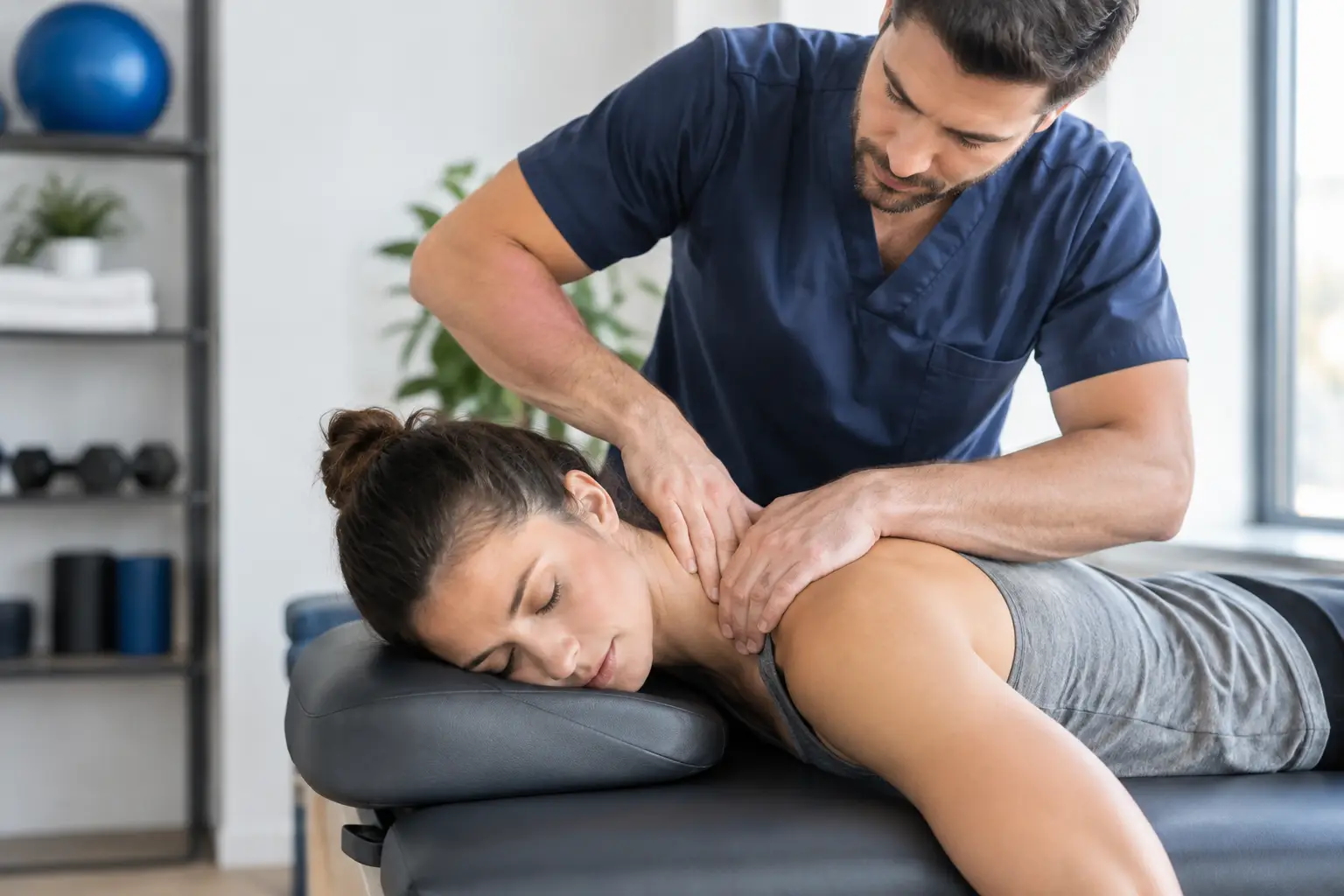
Neck pain that builds after a week at the desk, flares during overhead lifting, or makes checking your blind spot difficult is more than an annoyance. If you are wondering when to see a massage therapist for neck pain, the answer depends on what is driving it, how long it has lasted, and whether it is affecting your work, sleep, training, or arm function.
Massage can be a useful part of care for a stiff, sore neck. But when pain keeps returning, hands-on treatment alone is rarely the complete answer. A proper assessment can help distinguish a short-term muscular flare-up from a problem involving joint irritation, reduced movement tolerance, nerve sensitivity, or an injury that needs a more structured rehabilitation plan.
What Neck Pain Can Feel Like
Neck pain is a broad complaint, not one single diagnosis. It may feel like an ache at the base of the skull, tightness through the upper trapezius, a painful pinch when turning your head, or a dull soreness between the shoulder blades. Some people wake with a stiff neck after sleeping awkwardly. Others notice it gradually after long driving days, computer work, lifting, contact sport, or a change in training volume.
Muscles around the neck and shoulder blade can become sensitive and guarded when they are working harder than usual. That does not necessarily mean the muscles are damaged or that something needs to be “released.” Often, the area has become less tolerant of the demands placed on it. The goal is to settle the irritated symptoms, restore comfortable movement, and progressively build capacity for the activities that matter to you.
Neck pain can also refer into the upper back, shoulder, or arm. That pattern needs more careful assessment, particularly if you have tingling, numbness, weakness, or symptoms that travel below the elbow.
When to See a Massage Therapist for Neck Pain
Seeing a registered massage therapist can make sense when your neck feels muscularly tight, sore, or restricted and the symptoms are mild to moderate. This is especially true after a temporary increase in desk work, travel, training, or physical work. Massage may reduce discomfort, help you move more freely, and give you a useful window to return to normal activity.
It can also be a reasonable option when you have had a familiar neck flare-up before, there was no significant injury, and your symptoms are improving rather than escalating. Hands-on treatment may include work to the neck, upper back, chest, shoulders, and surrounding soft tissues based on what is actually contributing to the restriction.
The trade-off is that massage is generally better at helping you feel and move better in the short term than at preparing your neck for the demands that caused the problem. If neck pain reliably returns after the relief wears off, it is time to look beyond repeated passive treatment.
A rehabilitation assessment is often the better first step when neck pain is recurring, limiting your activity, or connected to a specific injury. It allows the clinician to assess your neck movement, shoulder and upper-back contribution, strength, nerve symptoms, and tolerance for work, lifting, running, sport, or prolonged sitting. From there, hands-on care can be used strategically rather than as the entire plan.
Signs You Should Book an Assessment Instead of Waiting
Have your neck assessed if pain has not improved meaningfully after one to two weeks, keeps coming back, or is changing how you train, work, sleep, or drive. The same applies if you are avoiding movements because they feel unreliable or if your usual stretches and self-massage only provide brief relief.
An assessment is particularly worthwhile after a fall, collision, sudden lifting incident, or other trauma. Whiplash-related neck pain can involve pain, stiffness, headaches, dizziness, and reduced confidence with movement. Early guidance can help you avoid the cycle of resting too long, becoming more guarded, then flaring every time you try to return to normal activity.
Seek prompt medical care rather than routine massage if neck pain comes with severe or worsening arm weakness, new loss of coordination, numbness affecting both arms or legs, difficulty walking, unexplained fever, major unwellness, or changes in bladder or bowel control. Sudden severe headache, dizziness, vision changes, speech changes, or facial symptoms also require urgent medical assessment.
Why Neck Pain Keeps Coming Back
Recurring neck pain is often less about one “tight” muscle and more about a mismatch between capacity and demand. A desk worker may tolerate several busy weeks until longer hours, poor sleep, and fewer breaks make the neck more sensitive. A lifter may feel fine until training volume rises, overhead work increases, or pressing and pulling are progressed too quickly. A tradesperson may flare after a run of awkward overhead tasks or long drives between job sites.
Movement restrictions in the upper back and shoulders can contribute, but they are not always the root cause. So can reduced neck and shoulder endurance, a recent injury, high workload, and the tendency to stop moving altogether once symptoms begin. The solution should match the pattern. Some people need short-term symptom relief and reassurance; others need a more deliberate return-to-loading plan.
What a Good Neck Pain Assessment Looks Like
A useful assessment starts with the story behind the pain. When did it begin? Was there an injury? Which movements or positions aggravate it? Does it stay local, travel into the arm, or come with headaches? What has already been tried, and what are you trying to get back to?
The physical assessment should then look at neck movement, upper-back and shoulder movement, strength, symptom response, and, where relevant, nerve function. The purpose is not to hunt for a single perfect explanation. It is to identify the most relevant factors, rule out concerns that need medical follow-up, and create a practical starting point.
For example, pain during turning may need a different approach than pain with overhead pressing, looking down at a phone, or sitting through a long workday. The plan should reflect your actual aggravators, not a generic set of neck exercises.
Treatment Should Create a Path Back to Activity
For an irritated neck, treatment may initially include hands-on therapy such as deep soft tissue work, joint mobilization or manipulation when appropriate, cupping, or instrument-assisted soft tissue therapy. These approaches can reduce symptoms and make movement more tolerable for some people. They are tools, not cures.
When symptoms are highly sensitive, Class IV laser therapy may also be considered as part of a broader treatment plan. The key is what happens after the appointment: can you turn your head more comfortably, complete a workday with fewer symptoms, return to the gym, or gradually tolerate the movement that previously flared you?
That is where rehabilitation matters. A progressive plan may include neck endurance work, upper-back and shoulder strengthening, controlled range-of-motion drills, and graded exposure to lifting, computer work, driving, or sport-specific demands. The right exercises are not necessarily complicated. They need to be specific enough to challenge you without repeatedly provoking the problem.
If you are a runner, that may mean building tolerance for arm swing and impact without guarding your neck. If you lift, it may mean adjusting pressing, pulling, carries, or bar position temporarily while rebuilding capacity. If your pain is related to desk work, the plan may involve gradually improving your tolerance for sustained positions rather than trying to maintain one supposedly perfect posture all day.
A More Complete Approach to Neck Pain
At Ground Up Rehab in Hamilton, neck pain care is built around a thorough assessment, meaningful hands-on treatment when it is useful, and progressive rehabilitation. The goal is not to keep you dependent on appointments for temporary relief. It is to help you understand what is aggravating your symptoms, restore confidence in movement, and build the strength and tolerance to return to work, training, sport, and daily life.
Massage can absolutely have a place in managing neck pain. But if your symptoms keep returning, travel into your arm, or are stopping you from doing what you normally do, do not settle for short-lived relief. Book an assessment and get a plan that moves you forward.
